Introduction: Indian Market Mein Aaj Kya Ho Raha Hai?
Indian stock market mein investors ki nazar abhi global economic developments par bani hui hai. US Federal Reserve ki interest rate policy, crude oil prices, US dollar ki strength aur Indian rupee ki movement jaise factors market sentiment ko influence kar rahe hain.
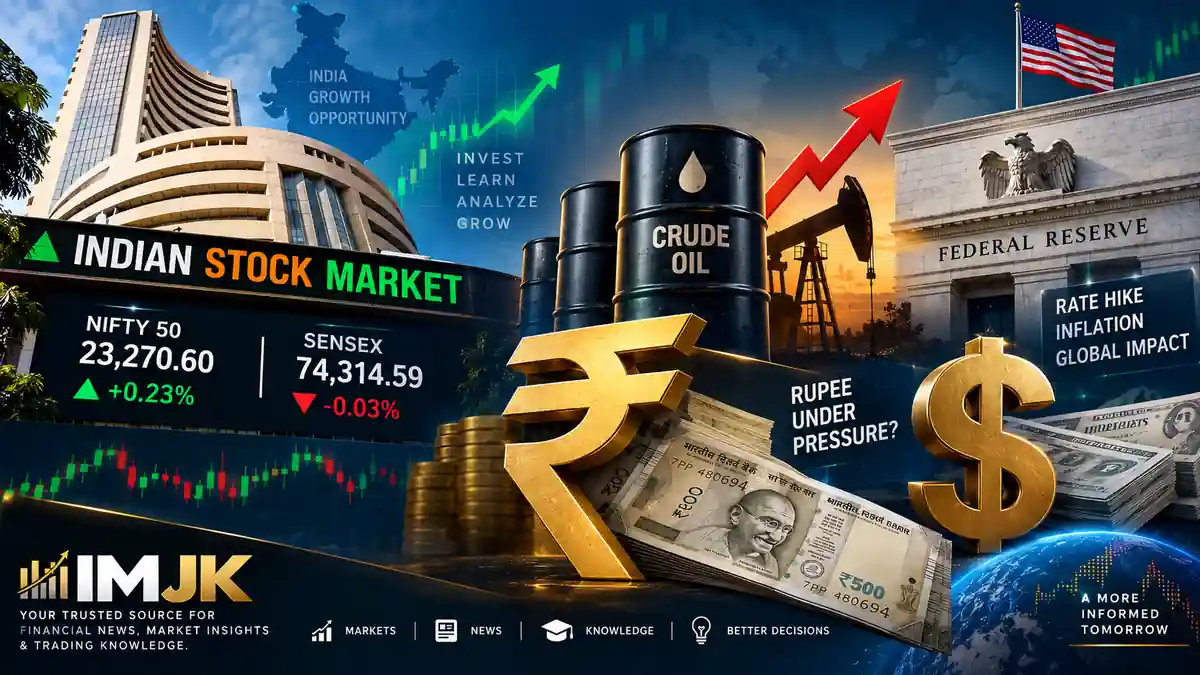
17 September 2026 ko Indian stock market mein trading ke dauran volatility dekhne ko mili. Trading session ke end par Nifty 50 lagbhag 0.23% badhkar 23,270.60 par close hua, jabki Sensex 0.03% ki halki girawat ke saath 74,314.59 par raha, Reuters ke mutabik.
Market mein recovery ki koshish ke bawajood investors ke beech caution bana hua hai. Iska ek reason US Federal Reserve ki rate hike aur doosra crude oil prices ka elevated level hai.
Lekin sawal yeh hai ki in global developments ka Indian investors, stock market aur forex traders par kya impact pad sakta hai?
Is article mein hum in factors ko simple Hinglish mein detail se samjhenge.
1. US Federal Reserve Rate Hike Ka Market Par Impact
US Federal Reserve America ka central bank hai. Yeh interest rates aur monetary policy ke through inflation aur economic conditions ko manage karne ki koshish karta hai.
17 September 2026 ki market reports ke mutabik, Federal Reserve ne apni benchmark interest rate mein 25 basis points ki increase ki. Rate hike ke saath future monetary policy ko lekar bhi market participants ne apna focus badhaya.
Rate Hike Ka Simple Meaning
Agar US mein interest rates badhte hain, toh US dollar-based assets investors ke liye comparatively attractive ho sakte hain.
Isse kuch situations mein:
- Dollar ki demand badh sakti hai.
- Emerging market currencies par pressure aa sakta hai.
- Foreign investors apne portfolio ko rebalance kar sakte hain.
- Borrowing cost badh sakti hai.
- High-valuation stocks par pressure develop ho sakta hai.
Lekin iska matlab yeh nahi hai ki har rate hike ke baad Indian stock market zaroor girta hai. Market ka reaction expectations, economic data aur investors ke sentiment par depend karta hai.
Indian Stock Market Par Pressure Kyun Aata Hai?
Global investors apne investments ko alag-alag countries aur asset classes mein distribute karte hain. Jab US interest rates badhte hain, toh kuch investors US assets mein apni exposure badhane par vichar kar sakte hain.
Agar emerging markets se foreign capital outflow hota hai, toh local stock markets aur currencies par pressure aa sakta hai. However, domestic investment, company earnings aur government policies bhi market ko support kar sakti hain.
2. Crude Oil Prices Ka Indian Economy Se Connection
Crude oil Indian economy ke liye ek important factor hai, kyunki India apni energy requirements ka ek significant portion imports ke through poora karta hai.
Jab international crude oil prices badhte hain, toh oil import karne ke liye zyada foreign currency ki zarurat pad sakti hai.
17 September 2026 ki Reuters report mein Brent crude oil prices $100 per barrel se upar rehne aur global geopolitical concerns ka zikr kiya gaya.
Higher Crude Oil Prices Ke Possible Effects
1. Import Bill Par Pressure
Agar oil ki international price badhti hai aur import quantity same rehti hai, toh overall import expenditure badh sakta hai.
2. Rupee Par Pressure
Crude oil imports ke liye dollar ki demand badhne par rupee par depreciation pressure develop ho sakta hai. Actual currency movement multiple factors par depend karti hai.
3. Transportation Cost
Fuel prices aur transportation costs par crude oil ke movements ka indirect impact ho sakta hai.
4. Company Profit Margins
Kuch manufacturing, transportation aur logistics companies ke input costs badh sakte hain. Companies apne additional costs customers par transfer kar paati hain ya nahi, yeh unki pricing power par depend karta hai.
5. Inflation Risk
Oil prices mein sustained rise economy ke cost structure ko influence kar sakta hai. Iska impact inflation aur monetary policy expectations par bhi ho sakta hai.
Kya Har Company Ko Crude Oil Price Rise Se Nuksan Hota Hai?
Nahi. Crude oil prices ka impact sector-wise alag hota hai.
For example:
- Oil-importing companies ke costs badh sakte hain.
- Kuch upstream energy companies ko higher prices se benefit mil sakta hai.
- Airlines aur transportation companies ke fuel expenses par pressure aa sakta hai.
- Refining companies ka margin crude prices, product prices aur refining spreads par depend karta hai.
Isliye sirf crude oil ke price ko dekhkar kisi stock ke performance ka conclusion nikalna sahi nahi hoga.
3. Indian Rupee Weakness: Forex Traders Ko Kya Samajhna Chahiye?
Indian rupee ki value US dollar ke comparison mein continuously fluctuate karti hai. Currency market mein exchange rate par interest rates, trade balance, crude oil prices, foreign investment flows aur central bank actions ka influence ho sakta hai.
17 September 2026 ko rupee ne intraday trading mein 96 per dollar ke level ko cross kiya, lekin baad mein recovery hui aur currency lagbhag 95.94 per dollar par settle hui, Reuters aur PTI-based reports ke mutabik.
Rupee Weak Hone Ka Meaning
Agar exchange rate 1 USD = ₹95 se badhkar 1 USD = ₹96 ho jata hai, toh ek dollar kharidne ke liye comparatively zyada rupees ki zarurat hoti hai.
Is situation ko rupee depreciation ya rupee weakness kaha ja sakta hai.
Rupee Weakness Ke Possible Effects
Importers
Jo companies imported raw materials, machinery ya energy products kharidti hain, unke expenses badh sakte hain.
Exporters
Kuch exporters ko foreign currency revenue ko rupees mein convert karne par benefit mil sakta hai. Lekin unke imported inputs, foreign expenses aur hedging arrangements bhi important hote hain.
Students and Travelers
Foreign education, international travel aur overseas payments ki cost rupee weakness ke dauran badh sakti hai.
Forex Traders
Currency traders ko exchange rate ke saath interest rate decisions, central bank interventions, economic data aur global dollar movement par bhi nazar rakhni chahiye.
Important: Currency market mein leverage use karne se losses ka size badh sakta hai. Forex trading ko risk-free income source nahi samajhna chahiye.
4. RBI Ka Role Rupee Movement Mein
Reserve Bank of India, yaani RBI, Indian monetary system aur currency market se related important responsibilities handle karta hai.
Currency market mein excessive volatility ke dauran RBI ke actions market liquidity aur exchange rate conditions ko influence kar sakte hain. However, kisi particular exchange rate level ko maintain karna ya currency ki exact future direction predict karna guaranteed nahi hota.
Reuters ki report ke mutabik, 17 September ko probable RBI intervention aur portfolio inflows ne rupee par pressure ko limit karne mein role play kiya.
RBI Ke Possible Tools
RBI ke paas monetary aur liquidity management se related kai tools hote hain. Inmein foreign exchange market operations aur liquidity-related measures shamil ho sakte hain.
In actions ka objective specific situation ke according alag ho sakta hai. Investors ko RBI ke official announcements aur reliable financial reporting ko priority deni chahiye.
5. Foreign Investors Aur Domestic Investors Ka Role
Indian stock market mein Foreign Portfolio Investors (FPIs) aur Domestic Institutional Investors (DIIs) ki activities market liquidity aur sentiment ko influence kar sakti hain.
Foreign Portfolio Investors
Foreign investors global interest rates, currency movements, valuations aur economic outlook ko consider karte hain.
Agar global risk perception badhta hai, toh kuch foreign investors apni exposure reduce kar sakte hain. Lekin har foreign selling ka reason same nahi hota.
Domestic Institutional Investors
Domestic mutual funds, insurance companies aur other institutional investors Indian market mein capital invest karte hain.
Domestic buying kabhi-kabhi foreign selling ke impact ko partially offset kar sakti hai. Market par final impact buying aur selling ke size, timing aur overall sentiment par depend karta hai.
Investors Ko Kya Track Karna Chahiye?
- FPI buying and selling data
- DII activity
- Market breadth
- Trading volume
- Corporate earnings
- Sector performance
- Global market cues
Sirf ek din ke institutional flow data se long-term market trend ka definite conclusion nahi nikalna chahiye.
6. Nifty 50 Aur Sensex Mein Difference Kya Hai?
Indian stock market ko samajhne ke liye Nifty 50 aur Sensex do important benchmark indices hain.
Nifty 50
Nifty 50 National Stock Exchange par listed 50 major companies ka index hai. Yeh Indian equity market ke performance ko track karne ke liye widely used benchmark hai.
Sensex
Sensex Bombay Stock Exchange par listed 30 major companies ka benchmark index hai.
Dono indices mein companies ka composition aur calculation methodology alag hoti hai. Is wajah se ek trading session mein Nifty aur Sensex ka performance thoda different ho sakta hai.
17 September 2026 ko Nifty mein halka gain aur Sensex mein marginal decline dekhne ko mila.
Kya Index Badhne Ka Matlab Har Stock Badh Raha Hai?
Bilkul nahi.
Index ka movement usmein included companies ke weightage aur performance se influence hota hai. Kuch stocks badh sakte hain, kuch gir sakte hain aur phir bhi overall index positive close kar sakta hai.
Isliye market analysis mein sirf index level nahi, balki market breadth aur sector-wise movement ko bhi dekhna useful hota hai.
7. IPO Activity Ka Stock Market Par Kya Impact Ho Sakta Hai?
Initial Public Offering, yaani IPO, ke through koi company pehli baar ya kisi specific offering ke madhyam se public investors se capital raise kar sakti hai.
17 September 2026 ko National Stock Exchange ke IPO se related activity bhi investors ke focus mein rahi. Reuters ke mutabik, NSE IPO ka issue size lagbhag $2.3 billion tha aur din ke dauran subscription activity report ki gayi.
IPO Activity Aur Liquidity
Jab market mein kai IPOs ek saath aate hain, toh investors ka capital primary market offerings mein allocate ho sakta hai.
Iska secondary market par impact depend karta hai:
- IPO ka size
- Investor participation
- Market liquidity
- Existing investments se fund withdrawal
- Overall investor sentiment
- Listing expectations
IPO mein investment karne se pehle company ka business model, financial statements, valuation, risk factors aur offer document samajhna zaroori hai.
IPO listing gain guaranteed nahi hota. Kisi bhi IPO mein issue price se neeche listing ya post-listing decline ka risk ho sakta hai.
8. Market Volatility Ke Dauran Trading Mein Kaunse Risks Hote Hain?
Market volatility ka matlab hai prices ka relatively fast aur significant movement.
Volatility traders ke liye opportunities create kar sakti hai, lekin risk bhi badha sakti hai. Khaaskar leverage-based trading mein chhota price movement bhi account par substantial impact daal sakta hai.
Common Trading Risks
Overtrading
Bar-bar trade karne se transaction costs aur emotional decision-making badh sakti hai.
Excessive Leverage
Leverage se potential gains aur losses dono amplify ho sakte hain.
Stop-Loss Risk
Stop-loss order risk management mein useful ho sakta hai, lekin volatile market mein execution expected price se different ho sakta hai.
News-Based Trading
Breaking news ke time price movements unpredictable ho sakte hain. Headline dekhkar bina verification ke trade karna risky ho sakta hai.
Emotional Decisions
Fear, greed aur loss recover karne ki jaldi trading decisions ko negatively affect kar sakti hai.
9. Beginners Ke Liye Basic Risk Management Tips
Agar aap stock market ya forex trading seekh rahe hain, toh sabse pehle market mechanics aur risk ko samajhna important hai.
1. Trading Capital Ko Samjhein
Sirf utni amount risk mein lagayein jiska loss aapki financial stability ko seriously affect na kare.
2. Leverage Ka Meaning Samjhein
Leverage se trade size badh sakta hai, lekin loss ka risk bhi increase hota hai.
3. Trading Plan Banayein
Entry, exit, risk limit aur trade ka objective pehle define karna useful ho sakta hai.
4. Market News Verify Karein
Financial news ke liye reliable sources aur official announcements ko priority dein.
5. Guaranteed Returns Se Bachein
Koi bhi genuine market participant future profit ki guarantee nahi de sakta.
6. Diversification Ko Samjhein
Ek hi stock, sector ya currency pair mein excessive concentration portfolio risk ko badha sakti hai.
Yeh general educational points hain, personalized investment advice nahi.
10. Aane Wale Trading Sessions Mein Kin Factors Par Nazar Rahegi?
Indian market participants ke liye kuch important factors hain jo future trading sessions mein attention mein reh sakte hain.
US Federal Reserve Statements
Investors Fed ke future rate decisions aur inflation-related comments ko analyze kar sakte hain.
Crude Oil Prices
Oil prices mein further rise ya decline Indian inflation, import costs aur market sentiment ko influence kar sakta hai.
USD/INR Exchange Rate
Rupee ki movement importers, exporters aur foreign investors ke liye important ho sakti hai.
Foreign Fund Flows
FPI activity market liquidity aur short-term sentiment ko influence kar sakti hai.
Corporate Earnings
Company-level performance ko samajhne ke liye revenue, profit margins, debt aur management outlook par focus karna useful hai.
Geopolitical Developments
International tensions aur supply disruptions crude oil, currencies aur global equities ko affect kar sakte hain.
Yeh factors market ko influence kar sakte hain, lekin inke basis par exact market direction ka prediction nahi kiya ja sakta.
Frequently Asked Questions (FAQs)
1. US Fed rate hike ka Indian stock market par kya impact hota hai?
US rate hike se dollar strength, global capital flows aur investor sentiment influence ho sakte hain. Indian market ka actual reaction domestic aur international factors par depend karta hai.
2. Crude oil price badhne se India ko kya problem ho sakti hai?
Higher crude prices se oil import bill, input costs aur inflationary pressure badh sakta hai. Impact sector aur government policies ke according different ho sakta hai.
3. Rupee 96 per dollar hone ka kya meaning hai?
Iska matlab hai ki 1 US dollar kharidne ke liye approximately ₹96 ki zarurat ho sakti hai. Exchange rate continuously change hota rehta hai.
4. Kya rupee weak hone se exporters ko benefit hota hai?
Kuch exporters ko foreign revenue convert karne par benefit mil sakta hai, lekin imported inputs aur other expenses ke karan final impact different ho sakta hai.
5. Kya market volatility mein trading karni chahiye?
Trading ka decision individual risk tolerance, experience aur financial situation par depend karta hai. High volatility mein losses ka risk significant ho sakta hai.
6. Kya IMJK trading signals provide karta hai?
IMJK financial information aur educational content publish karta hai. Kisi bhi article ko guaranteed trading signal ya personalized financial advice nahi samajhna chahiye.
7. Kya IPO mein guaranteed listing profit hota hai?
Nahi. IPO listing price issue price se upar ya neeche ho sakti hai. Investors ko offer document aur risk factors carefully review karne chahiye.
Conclusion
Indian stock market par global interest rate decisions, crude oil prices, rupee movement aur foreign investment flows ka important influence ho sakta hai. 17 September 2026 ko market mein Nifty aur Sensex ke beech mixed performance dekhi gayi, jabki investors Fed policy aur elevated oil prices ko closely track kar rahe the.
Financial markets ko samajhne ke liye sirf ek news headline ya ek indicator par depend karna appropriate nahi hai. Investors ko market fundamentals, company performance, valuation, risk management aur reliable information par focus karna chahiye.
IMJK ka objective financial news aur trading concepts ko simple language mein explain karna hai, taaki readers market ko better understand kar saken aur informed decisions ke liye apni research kar saken.
Financial Disclaimer
Yeh article sirf general informational aur educational purposes ke liye hai. Isse financial, investment, trading, tax ya legal advice nahi samjha jana chahiye. Stock market, forex aur other financial markets mein risk hota hai. Past performance future results ki guarantee nahi hai. Kisi bhi financial decision se pehle independent research karein aur zarurat padne par qualified financial professional se consult karein.
© IMJK. All Rights Reserved.
Nice Information